Quicker than quick!
✦
Case Study
Quicker than quick!
The viral meat brand that ignored mums and won big on social media.
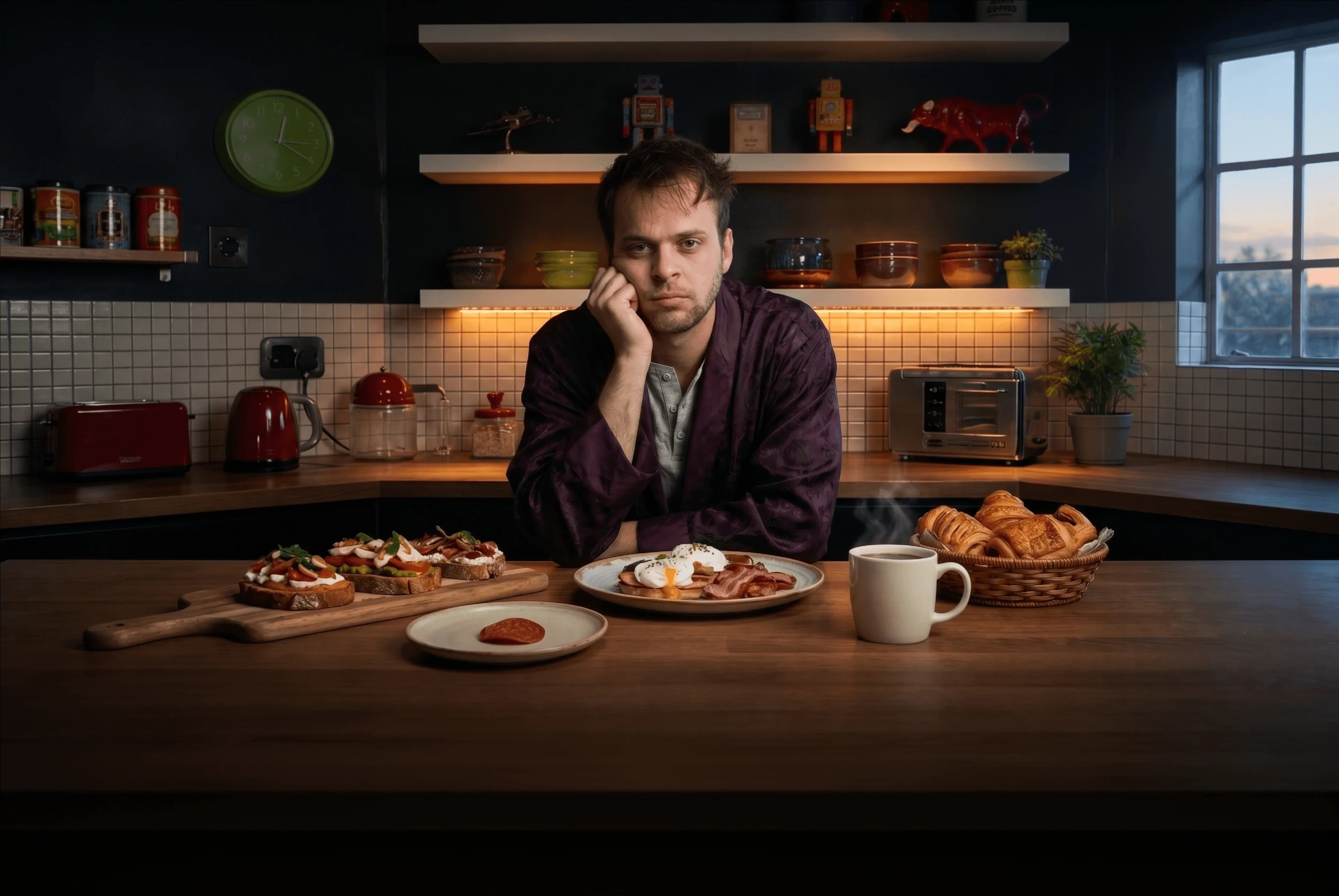
Country Arabia needed to launch a new premium chilled meat range in a crowded category. Instead of speaking directly to busy mums, we proved convenience through the laziest cook imaginable. If he could make it, anyone could.
Client
Country Arabia
Year
2017
Category
FMCG
Services
At a Glance
- ClientCountry Arabia
- CategoryFMCG - Food
- DeliveredSocial-first FMCG Launch Campaign
In Their Words
Testimonial
Almost Impossible brought a very sharp and refreshing perspective to the launch of Country Arabia’s premium chilled meats range. Instead of following the usual FMCG route of idealised family cooking, they found a much more ownable way to communicate convenience: Lazy Recipes. The campaign was funny, simple, highly relevant to the product, and built specifically for how people consume content on YouTube and social media. What I appreciated most was that the idea was not creativity for the sake of creativity. It was rooted in a clear product truth: if even the laziest cook could make something with Country Arabia, then busy families and everyday consumers could immediately understand the benefit. The work helped us stand out in a crowded category, delivered strong engagement, and gave the brand a tone that felt fresh, practical and memorable. Almost Impossible understood the brief, challenged the obvious route, and turned a product launch into a campaign people actually wanted to watch. Best part I get to know the Joseph, friend for life.

Danish KhanHOD - Marketing and Business Development, Mezzan Holding Co. (Country Arabia)
Connect on LinkedInAt a glance
Selling convenience by making it impossible to miss
Country Arabia needed to launch a premium chilled meat cuts range in a category crowded with polished, idealised food advertising.
Almost Impossible reframed the challenge around a simple behavioural truth: people do not always want to cook. They want the quickest possible route to something that tastes good.
So instead of showing perfect kitchens, perfect recipes and perfect families, we created Lazy Recipes by Country ARABIA: a series of YouTube-first films built around absurdly easy meals for bachelors, rushed mornings, last-minute dinners and midnight fridge raids.
The films were designed to work in the first seconds of a skippable pre-roll, then reward viewers who stayed with more humour.
By week three, the campaign had already delivered over 9M reported impressions and more than 4M reported video views across paid placements.
The four films now have over
2.2M public views on Country Arabia’s official YouTube channel.
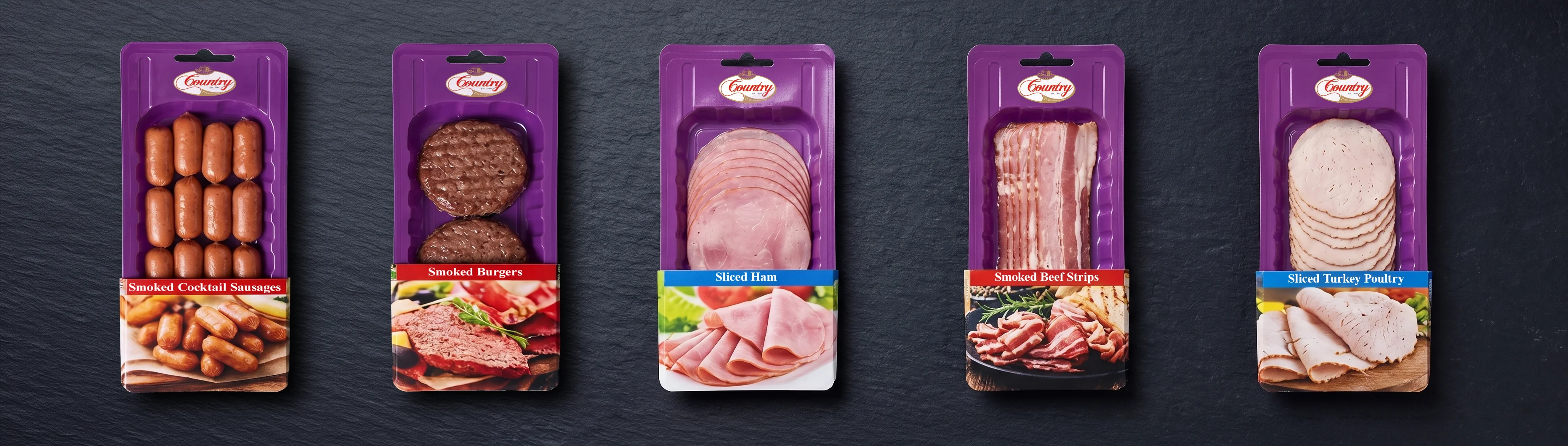
Unlike other chilled-meat brands, Country Arabia’s premium meats were packed in convenient serving sizes, just enough for a quick snack for one.
01 / The brief
The Brief
A new premium meat brand needed to launch in a crowded category.
Country Arabia was preparing to introduce a new range of premium chilled meat cuts based on quality, affordability and convenience.
The launch was planned around YouTube pre-roll ads, with the objective of building brand awareness and top-of-mind recall.
The initial audience was clear: UAE nuclear families who were time-starved, always on the go and practical.
But the category had a problem.
Most food communication was built around a version of cooking that looked too perfect to be true.
- Perfect kitchens
- Perfect ingredients
- Perfect parents
- Perfect timing
- Perfect meals
Real life does not cook like that.
02 / The tension we challenged
The category was selling convenience through fantasy
We needed to sell it through truth.
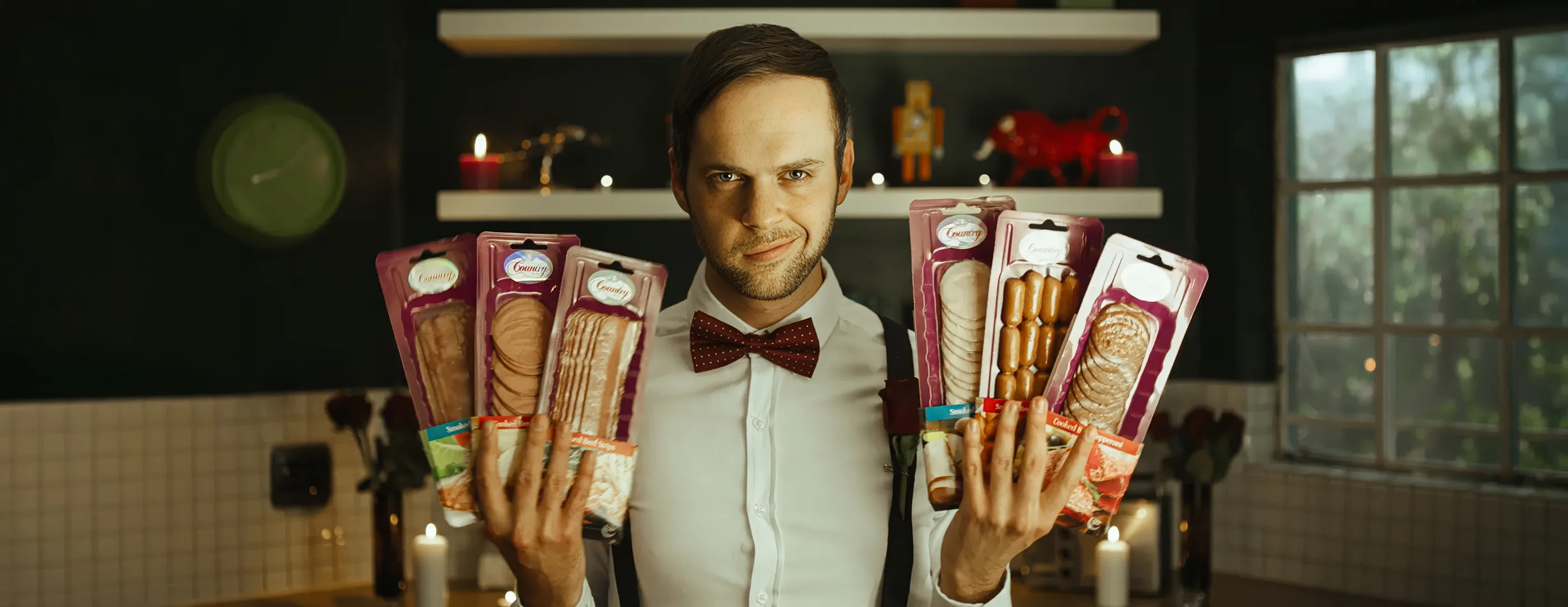
Food advertising in the category felt boring, polished and unreal. Everyone was depicting a false reality.
Country Arabia’s benefit was simple: great taste with minimum effort.
But on YouTube, saying that was not enough.
People were not waiting to enjoy an ad. They were waiting to skip it.
The campaign had to land the idea before the skip button won. It had to feel tailor-made for the medium, because consumers were constantly online and many brands were competing for the same attention.
This was the Define moment:
The real challenge was not how to make meat look premium. It was about making convenience feel instantly believable, entertaining, and impossible to ignore.

Instead of polished food fantasy, the campaign used real-life cooking chaos.
03 / The strategic reframe
We did not need to show the best cook using the product
We needed to show the laziest cook succeeding with it
That reframed the whole campaign.
If a bachelor with no patience, no planning and no interest in proper cooking could still make something with Country Arabia, then the product’s convenience became self-evident.
For mums, busy families and time-starved consumers, the message became even stronger:
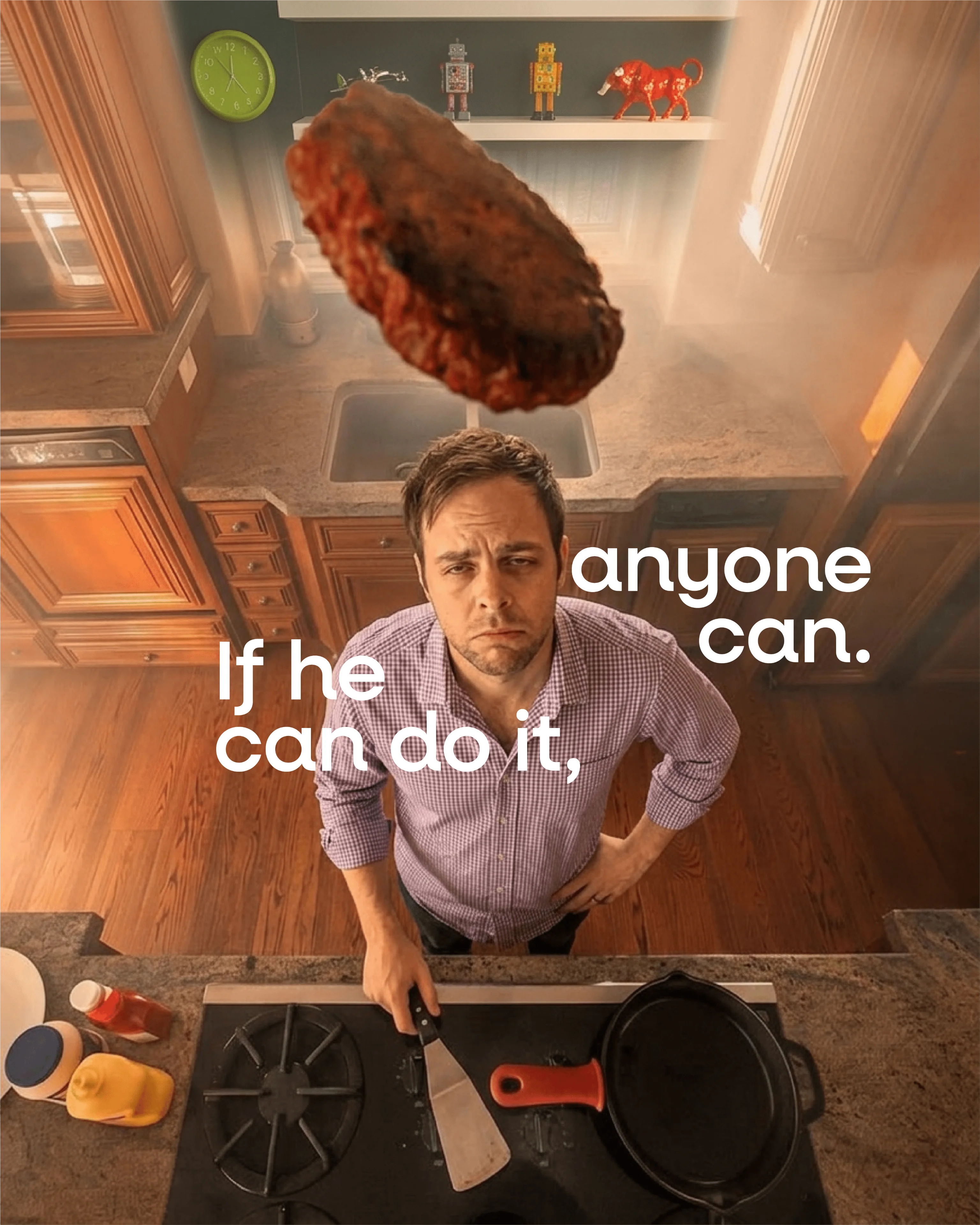
If he can do it, anyone can.
So we stopped performing perfect food advertising and built the campaign around imperfect cooking moments that people could recognise.
- Late for work
- Hungry at midnight
- Forgot the anniversary
- Making a sandwich in a rush
The strategy ignored the obvious target in execution, but sharpened the product benefit for everyone.
04 / The idea
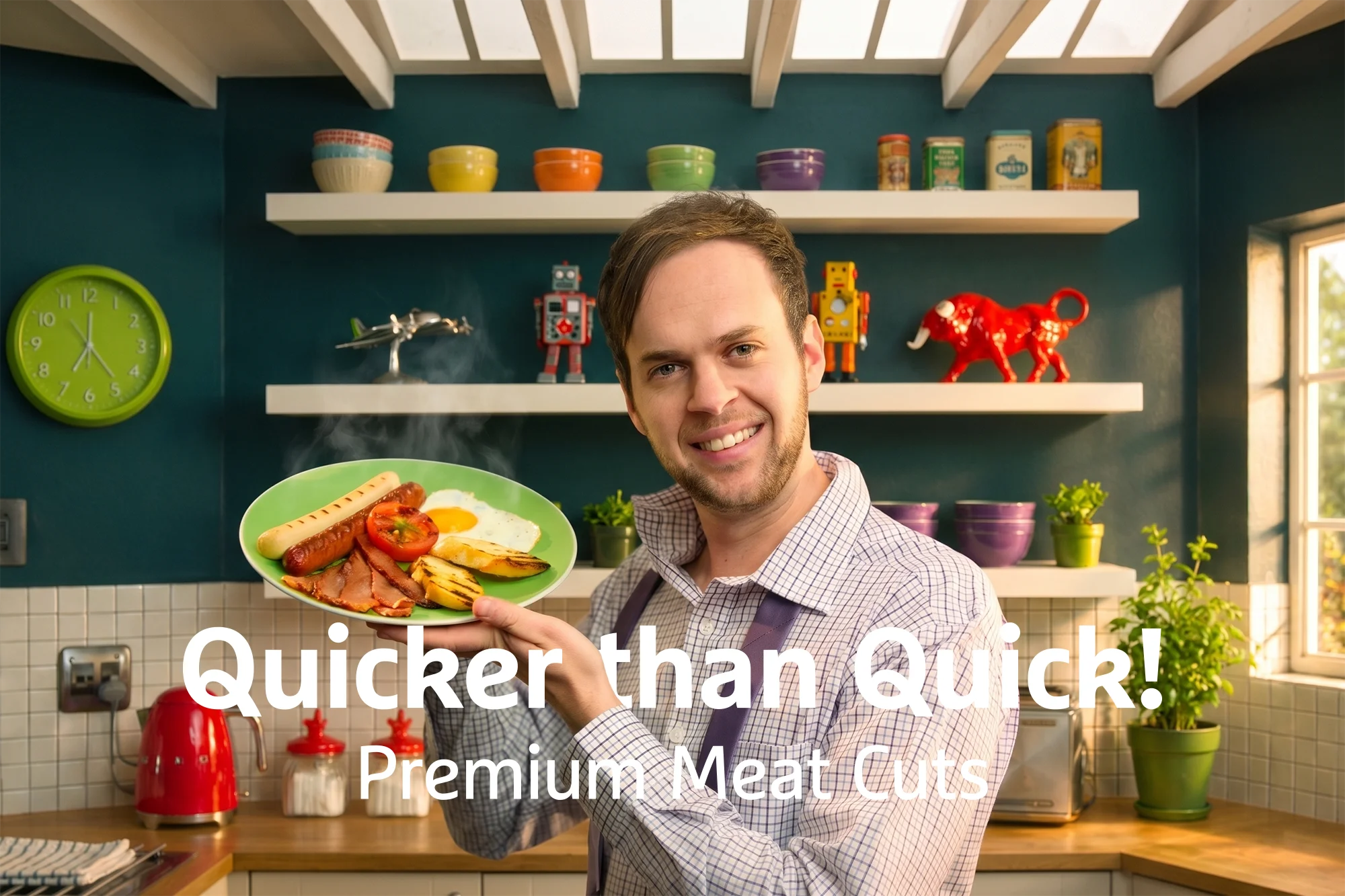
Quicker than quick premium meat cuts
The idea became Lazy Recipes by Country Arabia
Forget professional knives, beautifully marinated ingredients and impossible-to-prepare recipes. This was the ultimate cooking guide for busy, normal people: lazy recipes to create surprisingly good meals in minutes, or even seconds.
The campaign turned product convenience into comedy.
Each film used a familiar life moment and exaggerated it just enough to make the product memorable.
- A late-to-work breakfast
- A last-minute anniversary dinner
- A midnight pepperoni dinner
- A man-sized club sandwich
- A bachelor feast
Instead of showing food perfection, Country Arabia showed food survival.
And that made the brand feel different.
05 / What we made
A social-first campaign built for pre-roll behaviour
The films were designed around how people actually watch YouTube
The first 10 seconds of each pre-roll used rapid quick cuts, landing the product and the joke before viewers could skip. If the viewer stayed beyond the skippable moment, the film slowed down and revealed more of the scenario.
That made the medium part of the idea.
The campaign did not simply place TV-style films on YouTube.
It used YouTube’s skippable behaviour as a creative constraint.
The first seconds had to work hard.
The remaining seconds had to reward attention.
This was the Deliver work:
Shaping the creative around the platform, not forcing the platform to carry a traditional ad.
Lazy Recipes for real-life cooking chaos
The content system was built around ordinary moments made ridiculous.
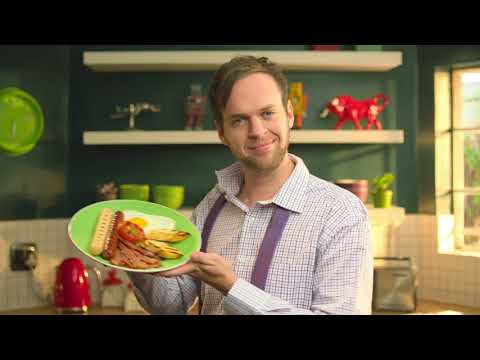
The Late-to-Work Gourmet Breakfast turned morning panic into a recipe, with the character frying breakfast while tying his tie.
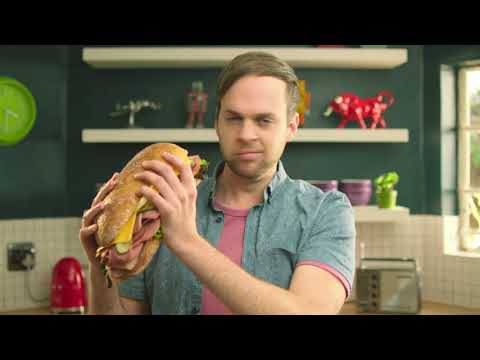
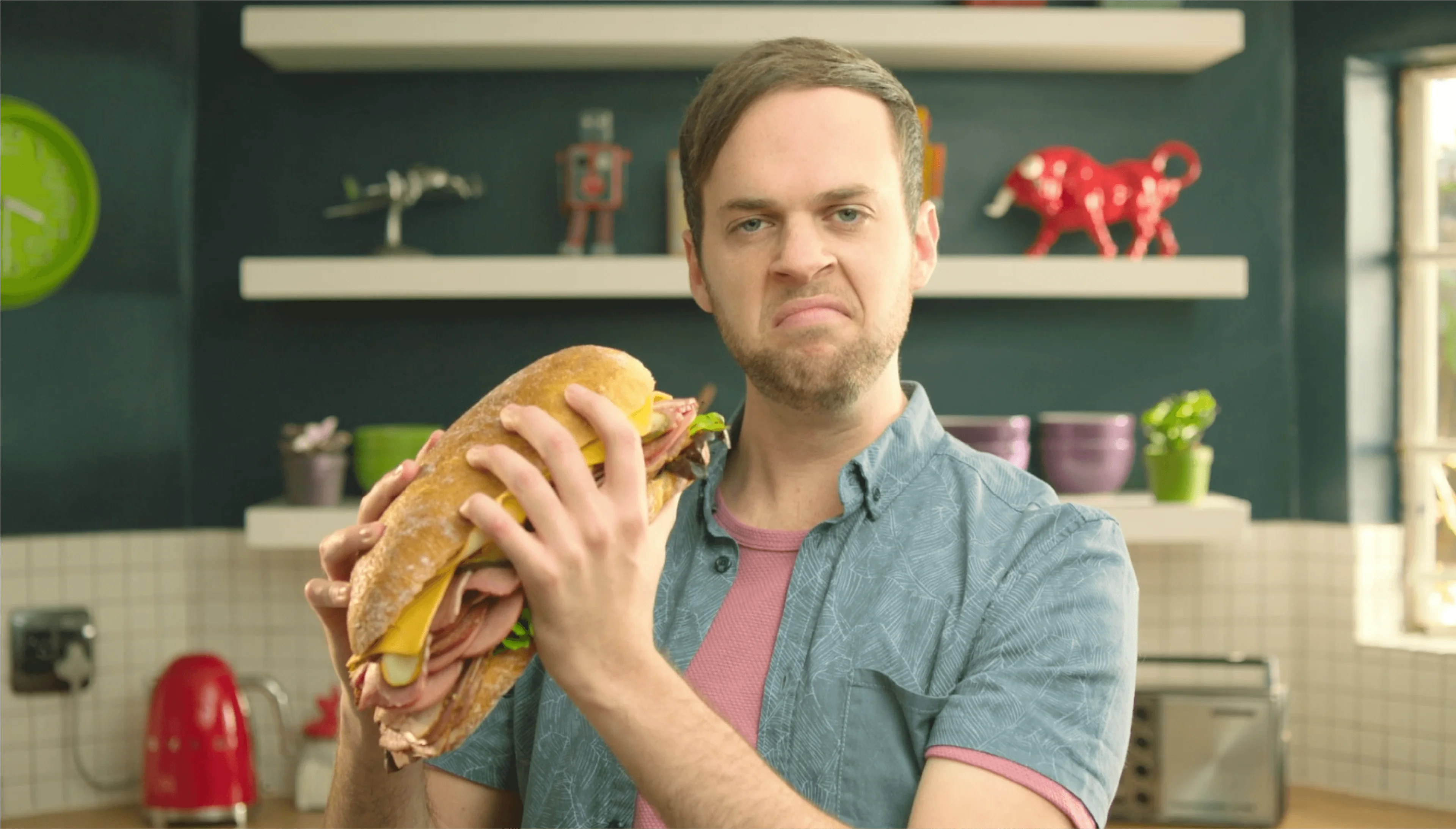
The Beyond Awesomeness Man Sandwich turned an ordinary sandwich into a comedy built around mortadella and salami.

The Romantic Last-Second Anniversary Dinner turned a forgotten anniversary into an absurd romantic gesture.

The Open-Fridge Midnight Pepperoni Dinner turned late-night fridge grazing into a “recipe”.
Each film made the same point in a different way:
Country Arabia made food faster, easier and more forgiving.
A tone that made the brand feel different
Food advertising often treats cooking as a performance.
Lazy Recipes treated it as a confession.
The humour came from saying what people already knew but rarely saw in food ads: sometimes you are late, tired, hungry, forgetful, lazy or simply not in the mood to cook properly.
The British-accented narrator added a mock-serious cooking-show tone, making the lazy behaviour feel even more absurd.
The product remained the hero because the joke only worked if the meal could be made quickly.
Comedy was not decoration.
It was the proof of convenience.
A product truth disguised as entertainment
The campaign was funny because it was honest.
People do not always have time to cook from scratch. They do not always plan ahead. They do not always want family-sized portions. Sometimes they want something fast, tasty and easy.
Country Arabia’s smaller premium chilled meat cuts gave the campaign a product truth to build from.
By targeting bachelors and lazy cooks, the films made convenience visible. But the message travelled beyond them.
If the product worked for the least motivated cook, it could work for everyone.
That is why the strategy still holds today.
The platforms may change, but the behaviour has not: people still want shortcuts that feel good, taste good and fit real life.
06 / How it showed up in the world
The campaign launched across YouTube and paid digital placements as a social-first video campaign
6M
YouTube Impressions by week 3
2M
YouTube True Views
30%
View-through rate
3M
Cadreon Impressions by week 3
2M
Cadreon True Views
54%
View-through rate
Country Arabia entered a crowded chilled meats category with a campaign that stood out from the rest.
Instead of relying on idealised family food advertising, Lazy Recipes turned convenience into a comic product demonstration.
The campaign delivered:
- Over 9M reported impressions across paid placements by week three
- More than 4M reported video views across YouTube and Cadreon by week three
- 30% YouTube view-through rate, compared with a listed 17% industry average
- 54% Cadreon view-through rate, compared with a listed 25% industry average
- Over 150,000 Cadreon clicks and 10,000 YouTube clicks
- Over 2.2M current public YouTube views across four live films
- A social-first content platform built from a simple product truth
- The campaign also ran across Expat Woman and Anazahra, adding further reach across relevant regional audiences
The results matter because the strategy was not dependent on a trend.
It was built on a behaviour that still exists: people want good food with less effort, and they reward brands that understand real life better than category clichés.
This is where the work began to Delight:
A chilled meat launch stopped behaving like a category ad and became a set of social films people actually watched.
07 / Why this matters
FMCG launches often default to the obvious
- Show the product
- Show the family
- Show the perfect kitchen
- Show the perfect meal
But the obvious does not always get noticed.
Country Arabia needed a launch idea that could cut through quickly, especially in a medium where viewers were ready to skip.
The answer was to make the product benefit undeniable.
Not by saying it was convenient.
By showing that even the laziest cook could make it work.
That thinking made the campaign useful then, and it still makes the strategy relevant now.
For brands entering crowded categories, the lesson is simple: do not just follow the target audience stereotype. Find the behaviour that proves your product truth most sharply.
- Define the real behaviour
- Deliver it in the platform's language
- Delight people with a story they actually want to watch
From targeting Moms to targeting lazy bachelors
Work Delivered
Capabilities
Digital Experience & Content
- Digital Film & Motion
- Social & Creator Content
Cross-cutting Capabilities
- Creative Strategy & Concepts
- Creative Direction
- Effectiveness & Results