
Strategic agency collaboration for brand success in the UAE
A practical guide for UAE brand teams to build stronger agency partnerships using clear role frameworks, smart operating rhythms, and collaboration tools that accelerate creative outcomes.
Published
Apr 4, 2026
Reading Time
10 min read
Author
Almost Impossible
TL;DR: Effective agency collaboration is about shared goals and joint accountability, not just task completion. Frameworks like RACI and DACI help clarify roles and streamline cross-team projects. Building trust and shared insight leads to faster, more innovative brand outcomes in the UAE’s complex market.
Agency collaboration is a growth lever when your agency shares your context, challenges your thinking, and owns outcomes with you, not just output.
Most brand managers assume their agency relationship is working simply because deliverables arrive on time. That assumption is expensive. In the UAE’s fast-moving market, where digital transformation, cultural nuance, and global competition collide, the difference between a transactional vendor relationship and a genuine creative partnership can determine whether your brand leads or follows. This guide breaks down what effective agency collaboration actually looks like, why it matters more than ever in 2026, and the specific frameworks, tools, and mindsets that turn good agency relationships into engines of brand innovation.
Key Takeaways
| Point | Details |
|---|---|
| Collaboration vs. outsourcing | Strategic collaboration leads to innovation and stronger brand outcomes compared to transactional outsourcing. |
| Proven frameworks | Adopt clear role models like RACI and regular syncs for smoother cross-agency teamwork. |
| Tech-powered efficiency | Using digital tools and dashboards cuts time on operations and increases transparency. |
| Trust and flexibility | Mutual respect and openness avoid micromanagement and foster creative results. |
Why agency collaboration matters for modern brands
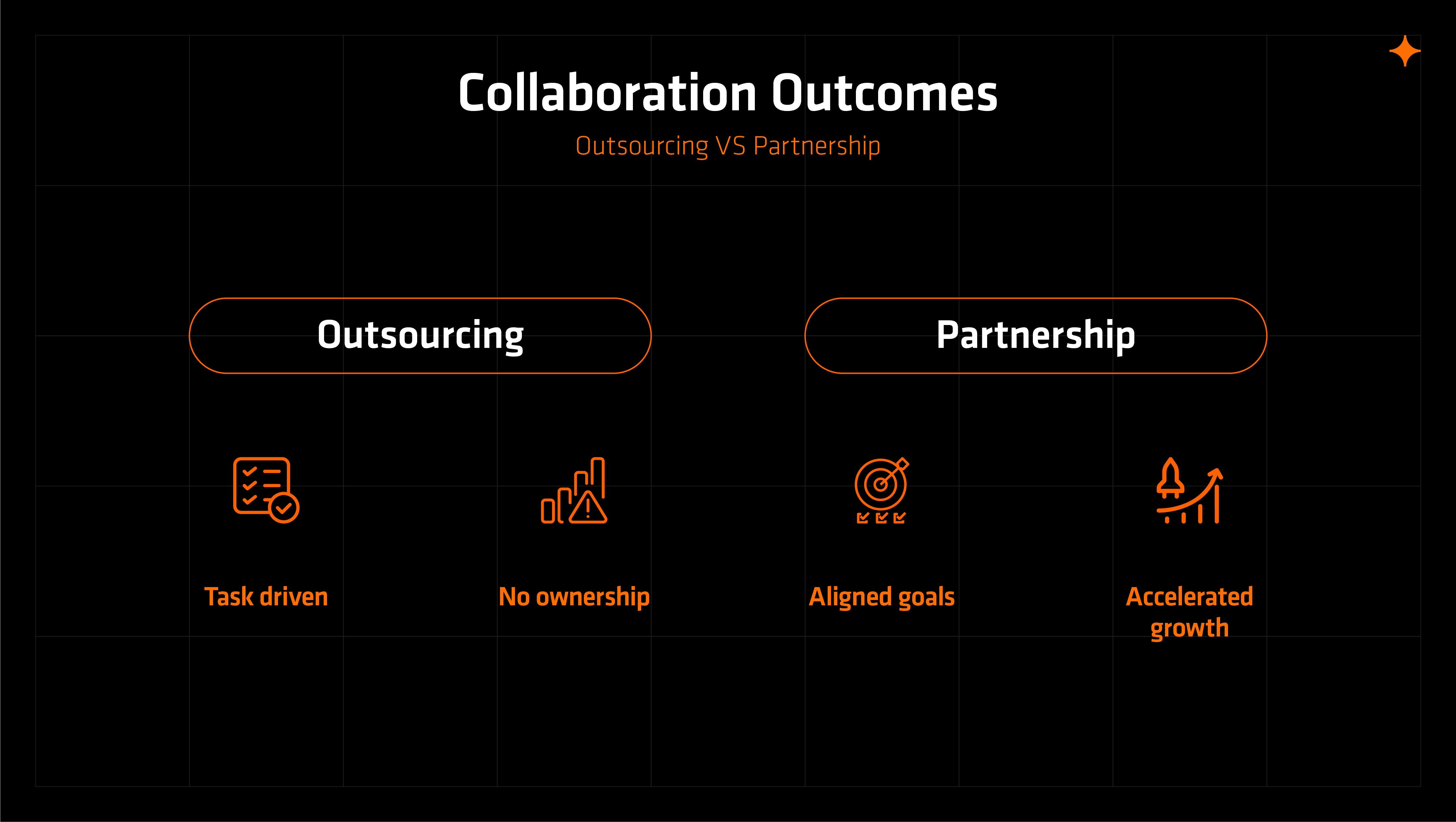
Agency collaboration is not the same as outsourcing. Outsourcing means you hand off a task and wait for a result. Collaboration means your team and your agency operate as an integrated unit, sharing context, co-creating solutions, and holding joint accountability for outcomes. The distinction sounds subtle. The business impact is not.
Transactional outsourcing leads to misalignment, while integrated collaboration accelerates performance across every brand metric that matters. When both sides invest in shared goals rather than scoped deliverables, creativity accelerates and execution tightens.
The organisational evidence is compelling. Gallup’s research on employee engagement finds that the most engaged teams record 78% less absenteeism, and between 21% and 51% less staff turnover, than the least engaged. Those numbers reflect something real: people do better work when they feel like partners, not contractors.
For UAE-based brand leaders, the stakes are uniquely high. The country operates at the intersection of global ambition and local cultural specificity. Regulatory requirements, Arabic language considerations, and the expectations of a hyper-connected consumer base all demand that your agency understands your world deeply, not just your brief.
“The brands winning in the UAE are not the ones with the biggest budgets. They are the ones whose agency partners know their business well enough to challenge them.”
Here is why UAE brands are investing in closer agency collaboration right now:
- Speed to market: Integrated partners move faster because context does not need to be rebuilt every project cycle.
- Cultural accuracy: Local-global hybrid agencies navigate regulatory and audience nuance without constant client correction.
- Creative ambition: Agencies with genuine partnership status push harder for bold ideas rather than safe executions.
- Consistent brand voice: Shared knowledge systems keep messaging coherent across channels and campaigns.
- Innovation access: Collaborative agencies bring emerging tools and platforms to the table proactively, not reactively.
| Collaboration type | Typical outcome | Risk level |
|---|---|---|
| Transactional outsourcing | Task completion, limited innovation | High misalignment risk |
| Project-based partnership | Moderate alignment, episodic results | Medium |
| Integrated collaboration | Shared accountability, accelerated results | Low, with proper structure |
Proven frameworks and methodologies
Knowing why collaboration matters is step one. Knowing how to structure it is where most brand teams fall short. Two frameworks dominate effective agency collaboration: RACI and DACI.
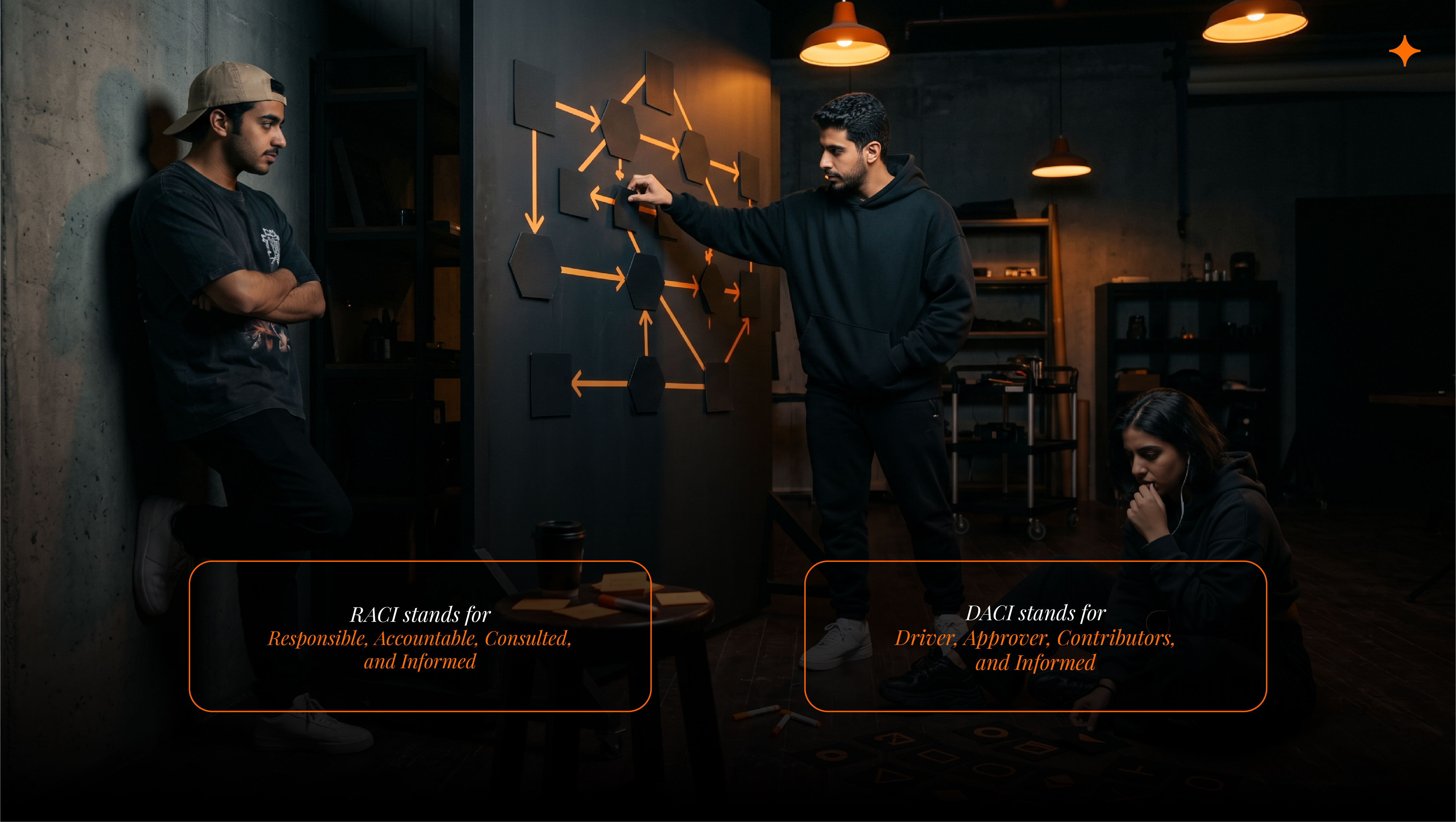
RACI stands for Responsible, Accountable, Consulted, and Informed. It maps every task to a person or team, eliminating the ambiguity that causes missed deadlines and duplicated effort. DACI adds a Driver role, which is useful when one party needs to actively push a project forward rather than simply own it. Key methodologies include RACI and DACI frameworks alongside regular feedback loops and shared dashboards for maximum alignment.
| Framework | Best for | Pros | Cons |
|---|---|---|---|
| RACI | Complex multi-team projects | Clear ownership, reduces conflict | Can feel rigid in fast-moving projects |
| DACI | Decision-heavy initiatives | Adds a driver for momentum | Requires buy-in from all parties |
| Informal collaboration | Small, agile projects | Flexible and fast | Prone to role confusion at scale |
Beyond frameworks, the rhythm of your collaboration matters enormously. Weekly syncs, bi-weekly creative reviews, and quarterly strategy sessions create a feedback loop that keeps both sides aligned without micromanaging every output.
Here is a practical rollout sequence for implementing a collaboration model:
- Define shared goals before any brief is written. Both sides must agree on what success looks like.
- Map roles using RACI or DACI for every project type you anticipate in the next quarter.
- Set a communication cadence that includes both operational check-ins and strategic reviews.
- Build a shared dashboard where both teams track progress, blockers, and results in real time.
- Run a retrospective after each major campaign to identify what worked and what to change.
Pro Tip: Skip the classic RFP process for your next agency search. Instead, commission a paid pilot project around a real business challenge. You will learn more about how an agency thinks and collaborates in four weeks of real work than in four months of pitch presentations.
Tools and structures that drive results
Building on model selection, successful brands invest in the right operational tools and agreements. The right platform stack does not just organise work. It creates transparency that builds trust over time.
Project management platforms like Asana, Monday.com, and Notion give both client and agency teams a single source of truth for timelines, approvals, and deliverables. AI-powered tools now layer on top of these, surfacing performance insights and flagging bottlenecks before they become problems. Agencies using collaboration tools saved more than two days per month on reporting alone, freeing that time for actual creative work.
| Tool | Main feature | Brand benefit |
|---|---|---|
| Asana / Monday.com | Task and timeline management | Real-time project visibility |
| Looker Studio / Tableau | Shared performance dashboards | Aligned on metrics that matter |
| Slack / Microsoft Teams | Async and real-time communication | Faster feedback cycles |
| AI reporting tools | Automated insight generation | Reduced admin, faster decisions |
| Figma / Miro | Collaborative design and ideation | Co-creation without email chains |
Tools alone are not enough. The structures around them determine whether they actually get used. Every effective agency collaboration needs:
- A service level agreement (SLA) that defines response times, revision rounds, and escalation paths.
- Shared KPIs agreed upon before work begins, not imposed after a campaign ends.
- A documented feedback process so that creative direction is clear, consistent, and not subject to individual interpretation.
- A data ownership agreement that specifies who holds audience data, campaign data, and creative assets.
Pro Tip: In multi-agency environments, which are common for large UAE brands managing PR, digital, and experiential separately, a data transparency agreement is non-negotiable. Without it, each agency optimises for its own metrics rather than your brand’s overall growth.
Common pitfalls and how to avoid them
Equipped with frameworks and tools, it is equally important to recognise and avoid common missteps. The most damaging mistakes in agency collaboration are rarely about process. They are about mindset.
The first pitfall is over-reliance on process itself. Some brand teams build such detailed approval workflows that creative momentum dies in committee. Structure should enable speed, not replace judgment.
The second, and more common, mistake is treating your agency as a vendor. Vendors execute. Partners think. When you withhold business context, limit access to leadership, or negotiate every scope change as if it is a transaction, you signal that you want execution, not ideas. You will get exactly what you asked for.
Over-micromanaging erodes trust, while mutual respect enables bold ideas that neither side would have reached alone.
Warning signs that your agency relationship has become transactional:
- Briefs are written in isolation and handed over without discussion.
- Agency team members rotate frequently because there is no relationship to retain.
- Creative work feels safe and predictable rather than surprising.
- Feedback is delivered as edits to finished work rather than input during development.
- Neither side raises problems until they become crises.
To rebuild or build trust from the start, follow these steps:
- Invite your agency into strategy conversations, not just execution briefs.
- Share business results, including what is not working, so the agency can solve real problems.
- Acknowledge good work publicly within your organisation. It signals that the partnership has internal champions.
- Give creative latitude on at least one project per quarter to see what your agency produces without constraints.
- Review the relationship itself, not just the work, in every quarterly session.
Why brands in the UAE should embrace a new era of agency collaboration
Here is the uncomfortable truth: most UAE brands are still running agency relationships designed for a slower, less complex market. The contract-driven, deliverable-focused model made sense when campaigns were annual and channels were few. It does not make sense when your brand needs to respond to cultural moments in hours, not weeks.
The brands we see doing exceptional work in this market share one quality. They have let go of control as a proxy for quality. They have replaced it with alignment, shared accountability, and genuine creative trust. Hybrid local-global agency partnerships are increasingly essential for navigating UAE’s unique regulatory and cultural landscape while maintaining global brand consistency.
AI is accelerating this shift. Agencies that use AI tools for audience insight, content personalisation, and performance analysis can move faster and smarter, but only if the client relationship gives them access to the data and context they need. Locking down information in the name of brand control produces slower, less relevant work.
The boldest brand leaders in the UAE are not the ones with the most detailed agency contracts. They are the ones who have built relationships where both sides are genuinely invested in the outcome. That is the model worth building towards.
Take your brand partnership further with Almost Impossible
If this guide has shifted how you think about agency collaboration, the next step is finding a partner built for exactly this kind of relationship.
Almost Impossible works with clients in the UAE as an integrated creative partner, not a vendor. From the Bullet Train VR project to the Cards of Hope initiative, our work reflects what becomes possible when brand teams and creative agencies operate with shared ambition and genuine trust. If you are ready to move beyond transactional briefs and build a partnership that drives real brand results in the UAE market, we would like to talk.
FAQs
What is the key difference between agency collaboration and outsourcing?
Agency collaboration involves integrated partnership and joint value creation, while outsourcing is typically transactional. Transactional outsourcing leads to misalignment, while integrated collaboration accelerates brand performance.
Which frameworks help set clear roles in agency collaboration?
RACI and DACI are the most widely used frameworks, clarifying who is Responsible, Accountable, Consulted, and Informed on each project element. RACI and DACI frameworks are considered key methodologies for effective cross-functional collaboration.
How do digital tools impact agency collaboration results?
Digital collaboration tools reduce admin overhead and improve alignment across teams, freeing time for creative output and faster decisions.
Why should UAE brands consider hybrid local-global agency partnerships?
Hybrid partnerships balance cultural and regulatory understanding with international brand consistency. They’re especially useful in the UAE, where audiences, languages, and norms vary by context, and brand teams need both local fluency and global-level craft.
What are early warning signs of poor agency collaboration?
Frequent miscommunication, high agency team turnover, and creative work that feels predictably safe are all red flags. Over-micromanaging erodes trust, and once trust is gone, bold ideas stop coming.
Recommended
What's Next?

Start a Project
Have a challenging brief? We thrive on the impossible. Let's build something world-class together.
Get in touch
Join the Team
Obsessed with details? We're always looking for world-class designers and engineers.
View openingsFollow the Journey
See what we're building, reading, and learning. Connect with us on LinkedIn.
Connect on LinkedIn