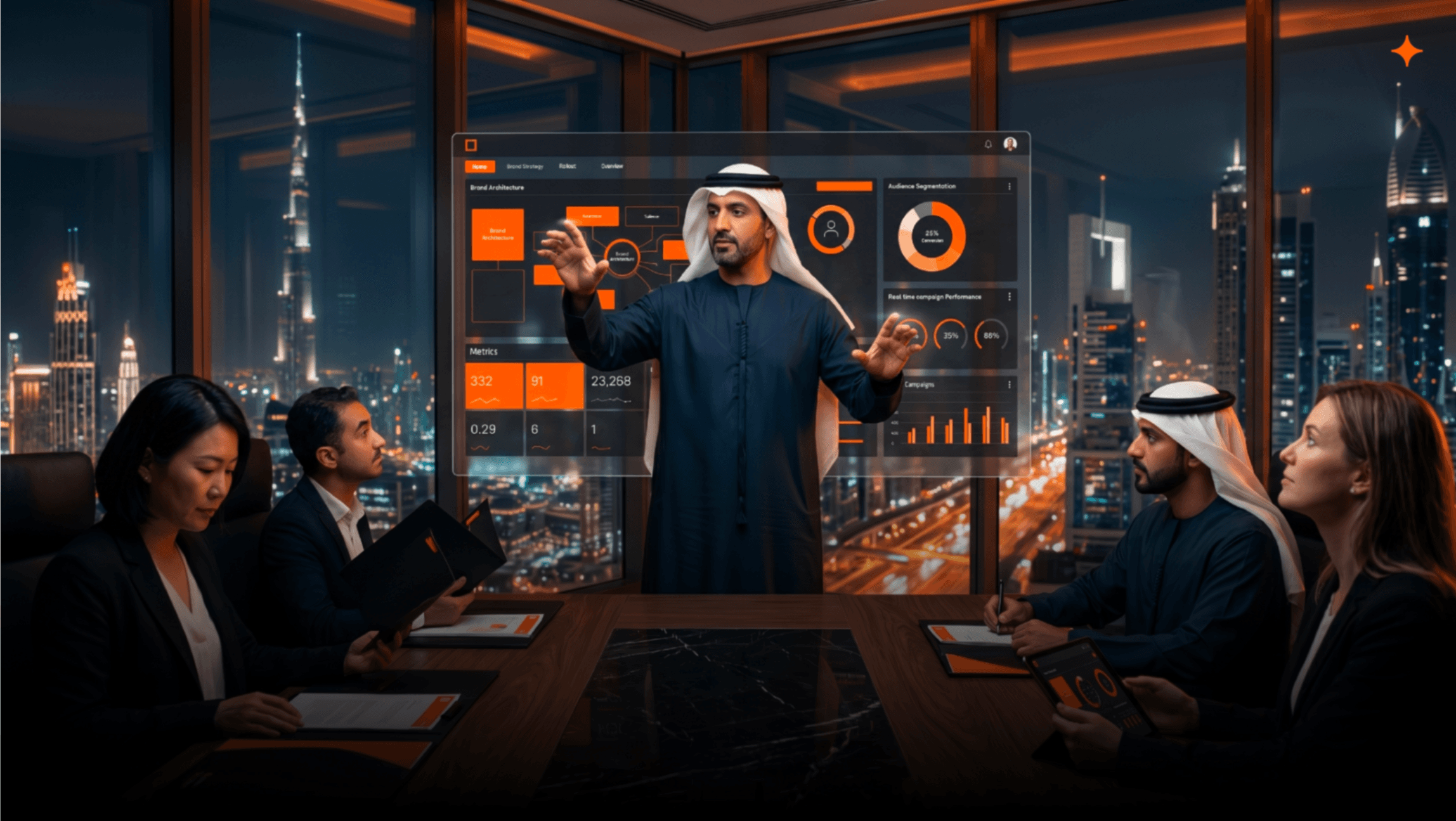
TL;DR: Interactive branding fosters two-way dialogue, increasing audience loyalty and emotional engagement. Dubai’s multicultural market benefits from culturally adapted, participatory experiences like AR and gamification. Success relies on genuine audience co-creation, not just advanced technology or visual spectacle
In Dubai, the brands people remember are the ones they get to participate in.
Branding has never been just about a logo. Yet many brand managers in Dubai still pour budget into static visuals and one-directional campaigns, then wonder why engagement stalls. The reality is that audiences, especially in a market as dynamic and multicultural as Dubai, expect to participate, not just observe. Interactive branding transforms the traditional brand monologue into a genuine conversation, and in doing so, it builds loyalty, deepens recall, and creates the kind of presence that passive advertising simply cannot achieve. This article explains what interactive branding is, why it matters specifically in Dubai, and how you can apply it through proven formats and real campaign examples.
Key Takeaways
| Point | Details |
|---|---|
| Interactive branding defined | It enables brands to connect with audiences in a conversation rather than a monologue. |
| Dubai’s unique advantage | Culturally sensitive tools like AR and AI create standout engagement for Dubai brands. |
| Strategic outcomes | Measuring curiosity-reward-return cycles shows clear impact of interactive branding. |
| Practical integration | Campaigns with immersive activations and event tie-ins deliver higher brand presence. |
What is interactive branding?
Interactive branding is a strategic approach where a brand actively invites its audience into a two-way exchange rather than broadcasting a fixed message at them. Think of it as the difference between a monologue and a dialogue. Traditional branding assumes a captive audience: you place an advert, the audience absorbs it, and ideally they remember you. Interactive branding assumes an empowered audience: you create an experience, the audience responds, contributes, or plays along, and in doing so, they form a far deeper connection with your brand.
The contrast matters more than ever today. Traditional branding systems are arguably obsolete in a fragmented media landscape where audiences split their attention across dozens of platforms, languages, and content formats. A rigid visual identity and a fixed brand voice cannot adapt quickly enough to stay relevant across all those contexts. Interactive branding, by contrast, is inherently flexible. It builds in mechanisms for adaptation, co-creation, and response, which means your brand can show up differently for different segments while remaining coherent at its core.
Here is what distinguishes interactive brands from their static counterparts:
- Responsiveness: The brand reacts to audience inputs in real time, whether through personalised content, live polls, or adaptive user journeys
- Participation: Audiences are given a role to play, not just a message to receive
- Memorability: Experiences are far stickier than impressions. When someone does something with your brand, they remember it
- Data richness: Every interaction generates insights about preferences, behaviours, and sentiment
- Emotional investment: Co-creating or playing within a brand environment generates a sense of ownership among audiences
Following online branding best practices now requires brands to treat their identity as a living system, one that evolves through audience contact rather than being handed down from a creative brief.
| Traditional branding | Interactive branding |
|---|---|
| One-directional communication | Two-way dialogue |
| Fixed visual identity | Adaptive, flexible identity systems |
| Impression-based measurement | Engagement and interaction metrics |
| Broad, generalised messaging | Personalised, context-sensitive content |
| Campaign-based presence | Continuous, evolving brand relationship |
“The old model of presenting a polished, unchanging brand face to the world is being replaced by systems that can flex, respond, and grow with their audiences.”
For brand managers, this shift also has implications for crisis management for brands, because an interactive brand already maintains ongoing dialogue with its audience, making it far better positioned to respond authentically when challenges arise. The foundation is not technology. It is the willingness to treat your audience as a collaborator rather than a passive recipient.
Why interactive branding matters in Dubai
With a clear understanding of interactive branding, let us explore why it is uniquely vital for brands operating in Dubai. The city is unlike almost any other market in the world. Over 200 nationalities live and work here, consuming media in multiple languages, carrying diverse cultural expectations, and making purchasing decisions influenced by a remarkable mix of heritage and aspiration.
Static branding struggles profoundly in this environment. A single message, designed for a single audience profile, cannot resonate across that breadth of diversity. Interactive branding, because it is inherently adaptive, offers a far more intelligent solution. When you build participation into your brand experience, each audience segment can find its own point of entry and its own meaningful exchange with your brand.
Critically, bilingual quizzes, AR, and AI-driven personalisation have already proven their effectiveness at boosting engagement for Dubai’s diverse audiences. This is not theoretical. Brands operating in the region are already using these tools to navigate cultural complexity and deliver personalised moments at scale. The technology exists, the audiences are receptive, and the competitive advantage for early adopters is significant.
Consider what interactive branding achieves in the Dubai context specifically:
- Cultural inclusivity: Bilingual and multilingual interactive experiences show respect for audience identity, which builds trust
- Premium positioning: Augmented reality try-ons and immersive digital activations signal sophistication, aligning well with Dubai’s luxury market expectations
- Event leverage: Dubai’s packed calendar of exhibitions and business events provides consistent opportunities to deploy interactive brand experiences in high-traffic environments
- Social amplification: Participatory experiences are inherently shareable, extending reach organically across the social platforms that Dubai audiences use heavily
To understand the scale of opportunity, look at how quickly Dubai’s digital engagement landscape is shifting:
| Engagement format | Audience response rate | Best suited for |
|---|---|---|
| AR product experiences | High, especially luxury and retail | Premium brands, fashion, automotive |
| Gamified brand challenges | Very high with younger demographics | Consumer goods, entertainment |
| AI-personalised content journeys | High across all demographics | Retail, hospitality, finance |
| Bilingual interactive content | High with multicultural audiences | Broad consumer brands |
| Live polling and event activations | Very high in business and trade contexts | B2B, events, exhibitions |
For brand leaders seeking brand success in the UAE, interactive branding is not a nice-to-have. It is the strategic infrastructure that makes genuine audience connection possible in a market this complex and this competitive. An audience engagement guide will tell you that sustained engagement requires relevance, and relevance in Dubai demands interactivity.
Core elements and formats of interactive branding
Understanding Dubai’s branding environment, now see the practical tools and mechanisms that turn interactive branding into measurable engagement. The good news is that the toolkit is rich and varied. The challenge, which separates effective campaigns from expensive experiments, is choosing the right format for your brand archetype and your audience’s actual behaviour.
Here are the core interactive branding formats worth integrating into your Dubai strategy:
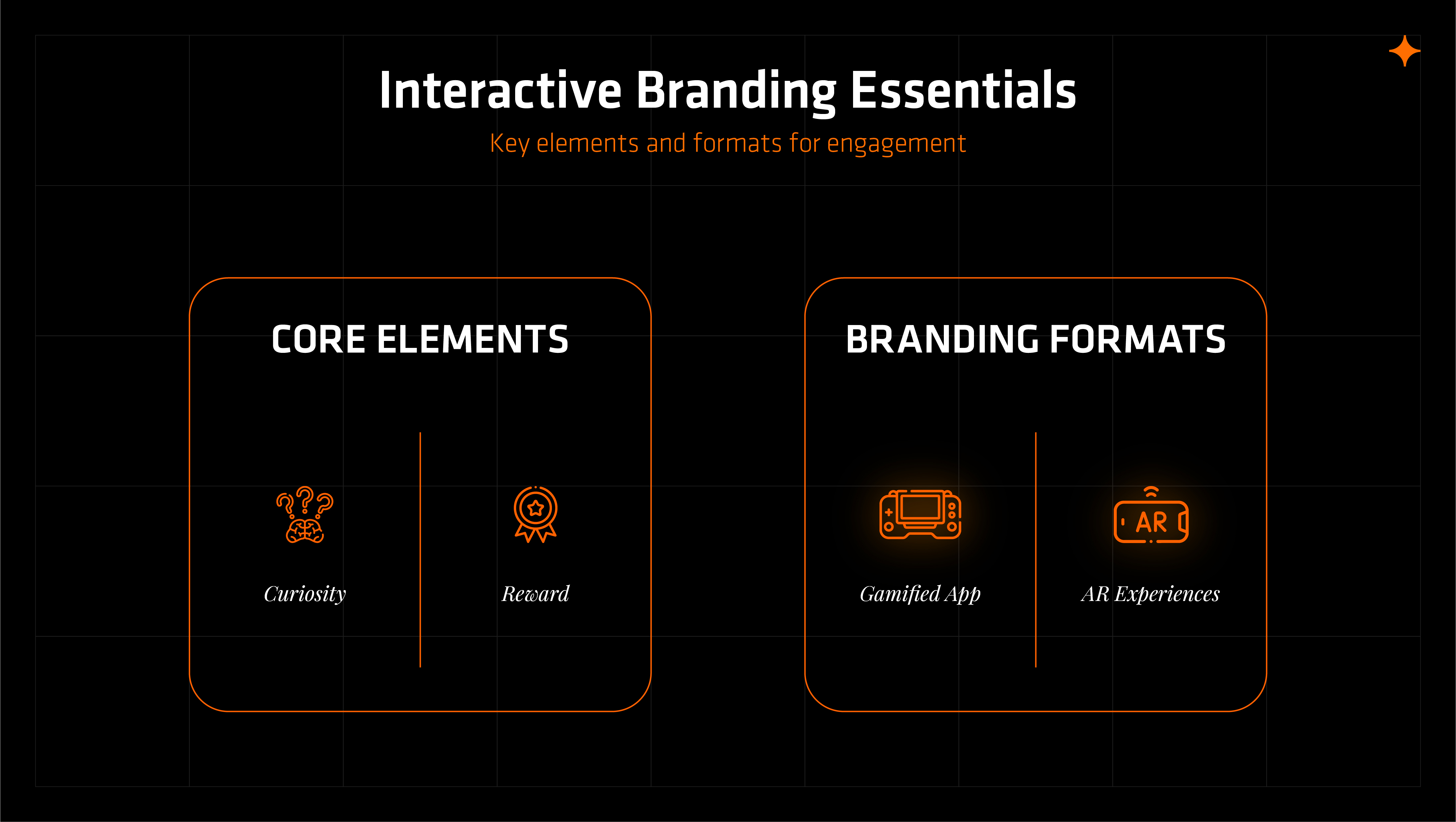
- Quizzes and assessments: These are deceptively powerful. A well-crafted quiz aligns your brand’s expertise with your audience’s curiosity, giving them personalised results while simultaneously educating them about your positioning. Bilingual quizzes work especially well in Dubai’s multicultural market.
- Augmented reality experiences: AR try-ons for luxury goods, AR-enhanced retail environments, and AR brand filters on social platforms are all actively used in Dubai. They create immersive moments that audiences actively seek out and share.
- Gamification: Points, challenges, leaderboards, and rewards all tap into intrinsic motivation. Gamification boosts engagement by up to 150% when aligned correctly with the brand’s core experience and audience expectations.
- AI-driven personalisation: Rather than a single campaign message, AI allows you to serve each audience member a version of your brand story that is tailored to their behaviour, preferences, and context. This is particularly effective for Dubai’s diverse demographic mix.
- Live interactive events and exhibitions: Real-time audience participation at events, whether through live polls, interactive installations, or co-creation stations, creates powerful memories and drives significant social sharing.
- Interactive video and storytelling: Choose-your-own-adventure formats and shoppable video content give audiences control over their brand journey, dramatically increasing time spent and emotional investment.
The most effective interactive branding follows a curiosity-reward-return cycle. You spark curiosity through an unexpected or relevant entry point, you deliver a reward through the interaction itself (insight, entertainment, personalisation, or utility), and you design the experience to draw the audience back for more. This loop, when built correctly, is measurable through digital engagement strategies that track return visits, interaction depth, and downstream conversion.
Pro Tip: Before selecting a format, map your brand archetype. A heritage luxury brand and a challenger retail brand require very different interactive formats. The former might use bespoke AR experiences that feel exclusive and considered. The latter might use fast, shareable gamification that rewards spontaneity. Misaligning format and archetype produces interactions that feel off-brand, however technically sophisticated they are. Strong agency collaboration in the UAE can help you match format to brand archetype with precision, drawing on experience across industries. Your brand strength strategies will be far more effective when the interactive format genuinely reflects who you are.
Integrating interactive branding: Lessons from Dubai campaigns
To ground these tools in reality, consider Dubai campaigns that exemplify interactive branding in action. The city’s major events, from Expo 2020 to Dubai Fitness Challenge to major fashion and automotive launches, have become testbeds for some of the region’s most innovative interactive brand experiences.
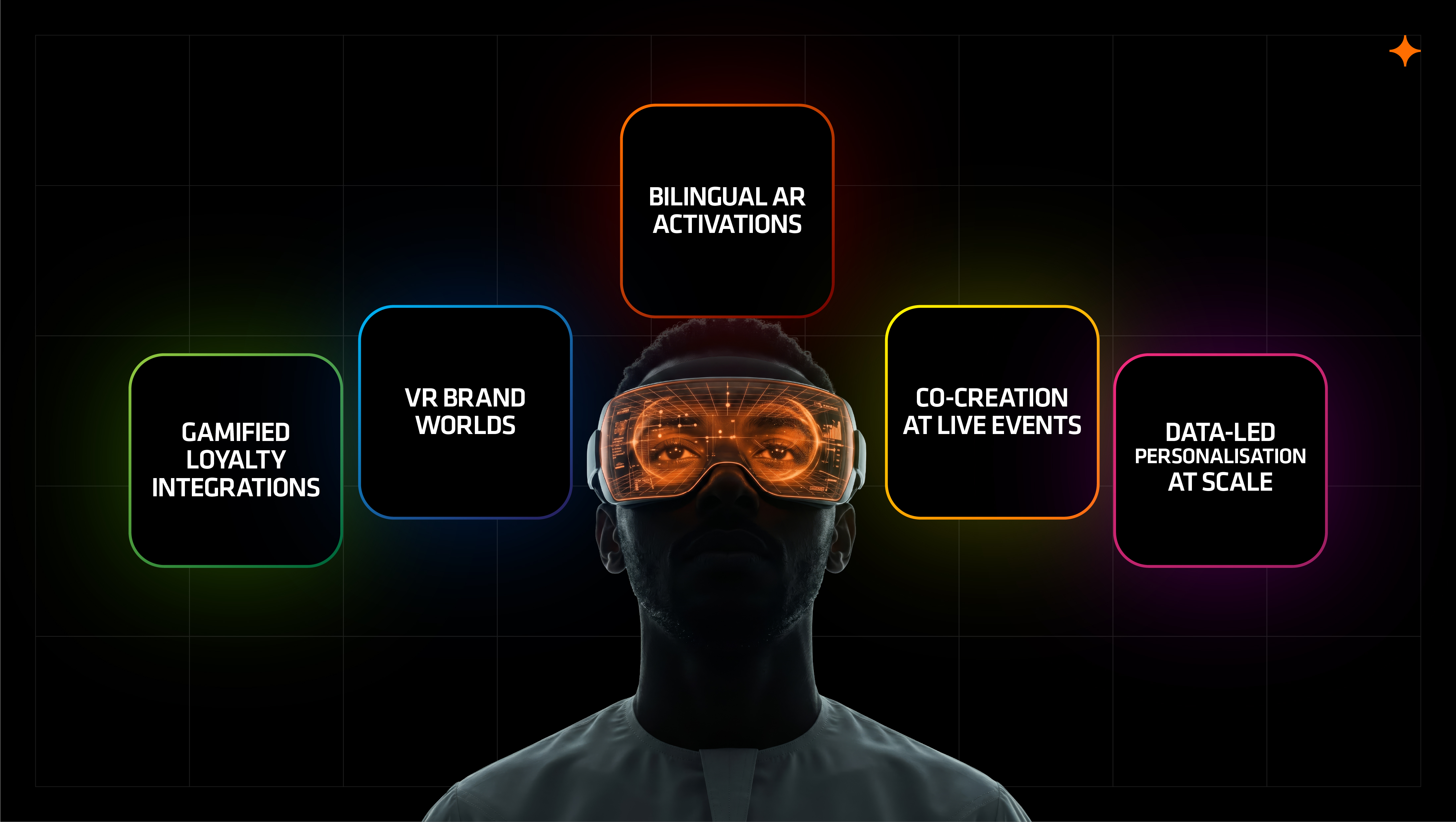
Integration with events and exhibitions fosters immersive brand presence that static advertising simply cannot replicate. Brands that show up at Dubai’s events with purely passive experiences, a banner, a brochure, a product display, are invisible compared to those offering something participatory.
Here is what Dubai’s most effective interactive campaigns have demonstrated:
- VR brand worlds: Virtual reality activations allow audiences to step inside a brand’s story. This is particularly effective for real estate, automotive, and tourism brands where the product or destination cannot be physically present at the activation point.
- Bilingual AR activations: Campaigns that deploy AR in both Arabic and English demonstrate cultural intelligence and dramatically widen their audience reach. These are not just translated experiences. They are culturally adapted ones.
- Gamified loyalty integrations: Retail and hospitality brands in Dubai have used gamified loyalty programmes that reward exploration, sharing, and repeat engagement, building habit-based brand relationships rather than transactional ones.
- Co-creation at live events: Giving audiences the tools to contribute to the brand experience, through live social walls, collaborative design stations, or personalised digital outputs, generates both emotional investment and shareable content.
- Data-led personalisation at scale: Using event registration data and real-time behavioural signals, brands have delivered hyper-personalised messages to attendees during and after events, creating a sense of individual recognition within a mass audience context.
Pro Tip: Localisation goes far deeper than translation. A campaign that adapts its interactive mechanics to reflect genuine cultural moments, whether Ramadan, UAE National Day, or Dubai Shopping Festival, will outperform a generic interactive format every time. The most successful Dubai campaigns treat localisation as a creative brief in itself, not an afterthought.
The Bullet Train VR experience is a compelling example of how immersive interactive design can create brand moments that audiences genuinely remember and discuss. Exploring brand client examples reveals the breadth of interactive approaches that have driven measurable results across Dubai’s most competitive sectors.
Here are a few more examples of how interactive brand experiences can show up in the real world:
Cards of Hope
The PopCon
Dubai’s interactive branding: The overlooked secret to engagement
Here is what most brand managers in Dubai miss: interactive branding is not primarily a technology decision. It is a cultural one. The brands that invest in the latest AR platform or the most sophisticated AI personalisation engine, but neglect to think deeply about the human moment they are trying to create, consistently underperform against brands that prioritise genuine audience co-creation above technical spectacle.
Dubai’s diversity is both the market’s greatest opportunity and its most common branding trap. The temptation is to build experiences that are visually impressive and technologically novel, because this market does have a genuine appetite for innovation. But novelty alone does not sustain engagement. What sustains engagement is the feeling that the brand actually sees you, understands your context, and has created something specifically relevant to your world.
The brands that win in Dubai treat their audiences as active contributors to the brand story, not as targets for a campaign. This requires humility. It requires listening. It requires building experiences that create space for the audience’s own identity to show up within the brand environment. Seeking collaboration for brand engagement with partners who understand this distinction is the single most impactful decision a Dubai brand manager can make when embarking on an interactive branding strategy.
Take your Dubai brand further with interactive solutions
If you are ready to explore interactive branding for your Dubai brand, working with a partner who understands both the creative possibilities and the cultural nuances of this market is essential.
Almost Impossible has spent nearly a decade building brand experiences that genuinely engage Dubai’s diverse, sophisticated audiences. From immersive VR brand activations to AI-driven personalisation strategies and bilingual campaign design, the agency brings creative rigour and strategic precision to every brief. Our high-profile brand clients include brands across luxury, retail, entertainment, and beyond, each with a unique brief and a measurable outcome. If your brand deserves more than a passive presence in one of the world’s most competitive markets, let us show you what genuine interactivity looks like.
If you’re starting from zero
- Pick one action you want people to take (scan, vote, play, customise)
- Make the reward immediate (progress, access, status, a reveal, a prize)
- Design for public participation, not private consumption (queues, groups, shares, reactions)
- Build a feedback loop (instant response, leaderboard, personalised output, follow-up)
- Measure one clean journey: curiosity → action → completion → return
If you’re planning an interactive brand moment in Dubai, we can help you define the idea, deliver the experience, and delight people in the real world.
FAQs
What makes interactive branding different from traditional branding?
How can Dubai brands tailor interactive branding to their audiences?
What is the best way to measure interactive branding success?
Which industries benefit most from interactive branding in Dubai?
Recommended

Start a Project
Have a challenging brief? We thrive on the impossible. Let's build something world-class together.
Get in touch
Join the Team
Obsessed with details? We're always looking for world-class designers and engineers.
View openingsFollow the Journey
See what we're building, reading, and learning. Connect with us on LinkedIn.
Connect on LinkedIn