B2B digital storytelling translates dense, technical, considered-purchase categories into content that buyers and influencers actually read. Closer to strategic consulting than to a creative campaign. The deliverable is enablement, not impressions.
The pattern is the story being right while the storytelling does not land. The product is genuinely good. The buyers exist. The pipeline is moving. The marketing assets read like a feature list and the sales team is left to do the actual narrative work in customer meetings.
How we approach B2B digital storytelling
We sit with the sales team and the customer success team before we sit with the brand team, because B2B stories are made of customer language, objections, and proof points first and brand polish second.
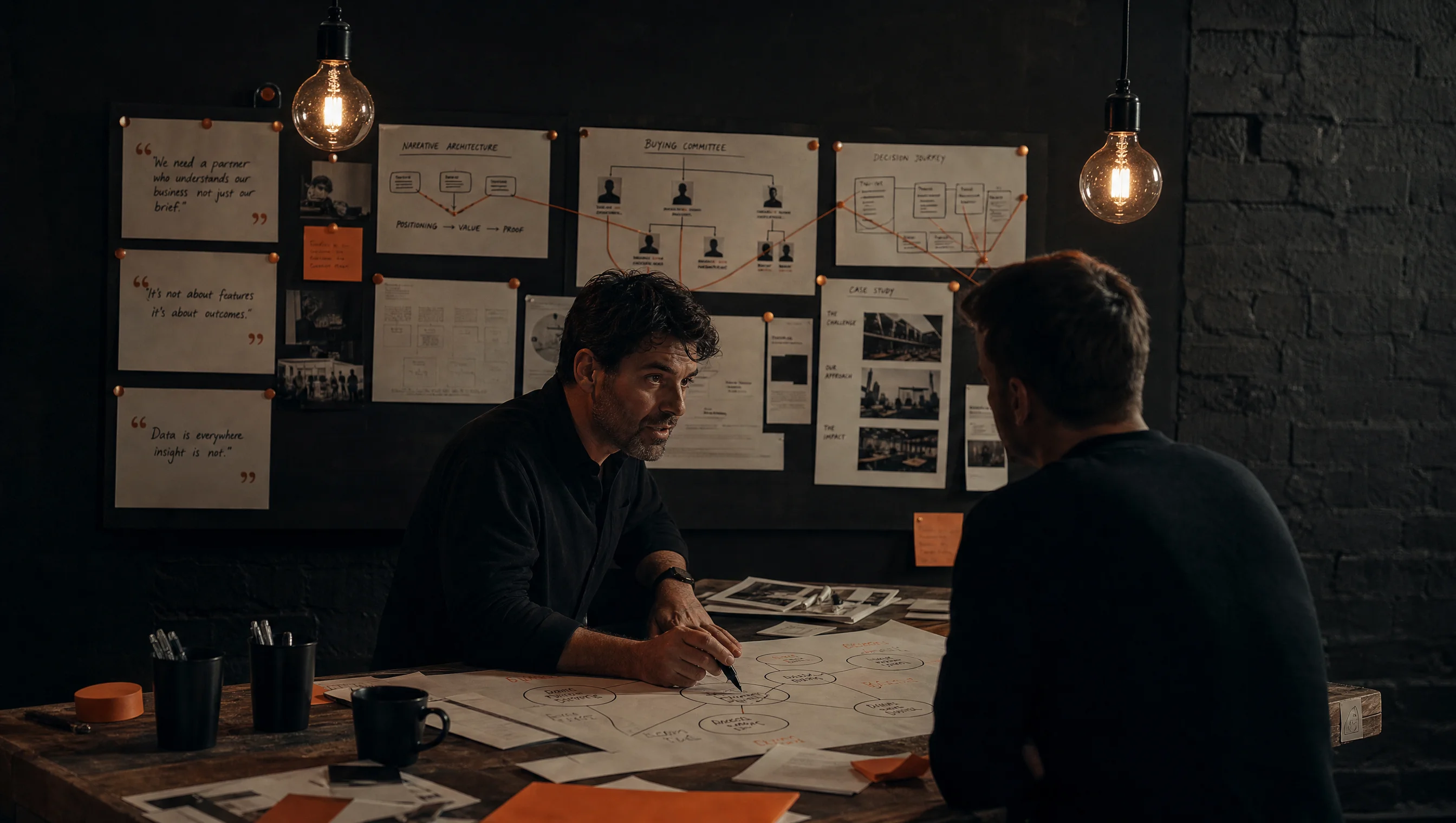
We then build a content architecture that maps to the buying committee. Champion, decision maker, finance, security, end user. Each part of the committee has a different question; the content has to answer the question the buyer is in the room with, not the one the brand team finds easiest to write.
Sales enablement assets are written in the same voice as the marketing assets. A sales deck that contradicts the website does more damage to the deal than the website did good.
What you take away
A B2B narrative architecture and positioning. An evidence library covering case studies, data, and testimonials. A sales-deck system and proposal toolkit. A digital sales-enablement surface. Sales-team training and ongoing involvement as the narrative meets new segments and product evolutions.
A measurement plan that connects content engagement to pipeline rather than to traffic, so the content layer has a shot at being defended internally on its own merits.

Engagements run eight to fourteen weeks for a focused brief, twelve to twenty for a full narrative rebuild. The work fits considered-purchase categories where the buying cycle is long, the buying committee is multi-stakeholder, and the difference between deals won and lost lives in the storytelling rather than the product.